
An Engineer’s Perspective.
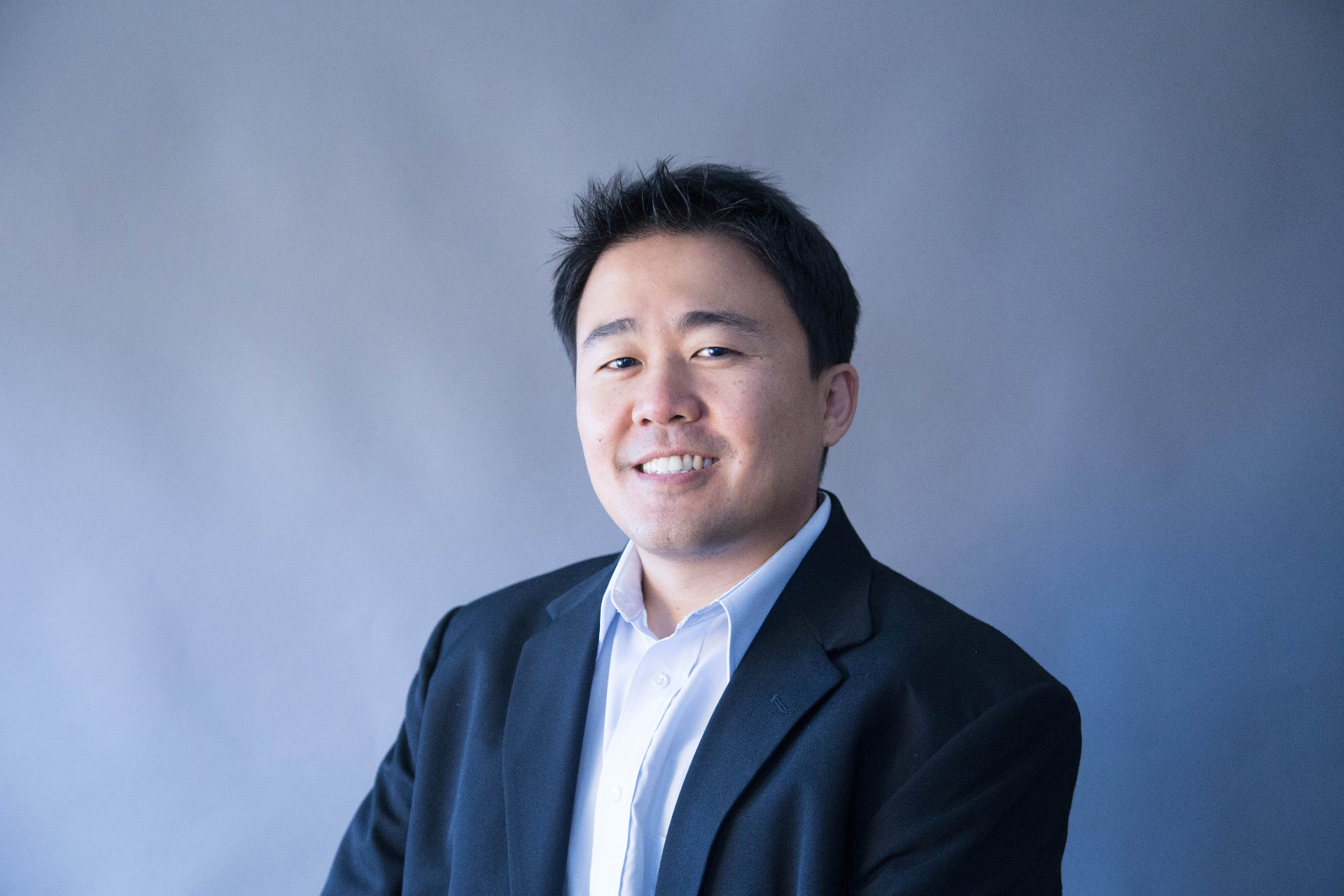
An experienced operator, strategist, and educator driving responsible innovation in frontier technologies from AI to semiconductors.
The work is rooted in an upbringing as the child of Taiwanese immigrants — and in bridging the gap between Silicon Valley’s innovation engine and the manufacturing powerhouses of Asia. That bridge is lived, not theorized — built across years living and working not only in the United States but also abroad in countries like Taiwan, Japan, and Germany, and through engagements with the government bodies that shape technology policy on both sides of the Pacific: NASA, the U.S. Department of Transportation, Japan’s JETRO and MITI (now METI), Taiwan’s ITRI, and Korea’s KOTRA, KIC, and KISED. The throughline is a career spent at the bleeding edge of each technology wave as it broke — the rise of the internet, mobile, SaaS, and AI. Sovereign Pivot deploys capital and high-leverage advisory at the intersection of complex hardware, semiconductors, and agentic AI.
BS Mechanical Engineering, Massachusetts Institute of Technology
From digital tenancy to agentic sovereignty.
The term “Sovereign Pivot” describes a fundamental shift in business architecture: moving from being a “renter” of professional opportunities to becoming an autonomous “owner” of value. The concept finds its origins in the 2022 global macroeconomic shift, where central banks began a historic pivot away from foreign-held currencies and into gold—securing “hard assets” that no external power could switch off. Today, this same drive for autonomy is fueling a Tech Sovereignty movement. Just as nations like France and regions across the EU are prioritizing “Sovereign AI” to ensure their infrastructure and data remain under their own control, modern lean companies must execute their own pivot to avoid the risks of “Digital Tenancy.”
For the ambitious founder, this is a transition toward agentic sovereignty. The future of value creation will not be concentrated in seven mega-corporations—it will be built by billions of founders and companies, each running lean and compounding their own advantage. This is not a call to avoid the big foundation labs; you should rent the brain, building on the best models available and letting someone else carry the cost of training them. But renting the brain is not the same as renting your company. The moat was never the model—every competitor builds on the same foundation. The moat is what only you can own: the proprietary context and closed data loops that make your AI smarter every cycle, the workflows you control end to end, and the distribution and customer trust no lab can replicate. A sovereign tech stack uses AI not merely for efficiency, but as a digital staff that secures your intellectual property, your distribution, and your strategic future.
The most durable of these moats is trust. As raw capability commoditizes, the next phase of advantage will be defined less by scale and more by control—who governs the data, who operates the models, and who is accountable for outcomes. Treating responsible AI as a core design feature rather than a compliance afterthought is how lean companies turn governance into a competitive edge that legacy machines, built to view your talent as a temporary line item, cannot match. Our work is dedicated to providing the roadmap and capital for founders to stop acting as cogs in a larger system and start becoming the sovereign owners of their own AI-driven destiny.
Sovereignty through engineering, capital, and corridor.
The next decade of valuable companies will be built where deep technical defensibility meets transpacific manufacturing reality. Sovereign Pivot exists to underwrite and advise that frontier.
Selected publications.
Our structured methods and first principles trace to peer-reviewed research in product development, quality engineering, and design-process error-proofing — conducted at Stanford and in collaboration with leading organizations like NASA, GE Aircraft Engines, and ABB.