
Make the company investable before you make the pitch.
Deep tech and AI founders rarely lose on technology. They lose in the gap between what they have built and what an investor can underwrite — a story that never makes the founding insight, the market, or the moat legible to capital.
Investor Readiness closes that gap across three pillars: the narrative architecture of the deck, the framing of your unique value and moat, and the disciplined outreach that gets it in front of the right people. Operator-built, from pre-seed to Series C and exit.
Built from both sides of the table.
This is not a template. It comes from raising as a founder, advising companies from founding through pre-seed, Series A/B, and on to Series C and exit, and sitting on the other side as a judge and mentor watching the pitches land or fall apart.
of pitches seen and evaluated at Silicon Catalyst, Berkeley SkyDeck, Ricoh Innovations, and beyond.
capital raised across operating and advisory engagements
full-lifecycle experience raising from part of the founding team to late-stage rounds and exit.
A deck is a performance. I have written for the biggest stages.
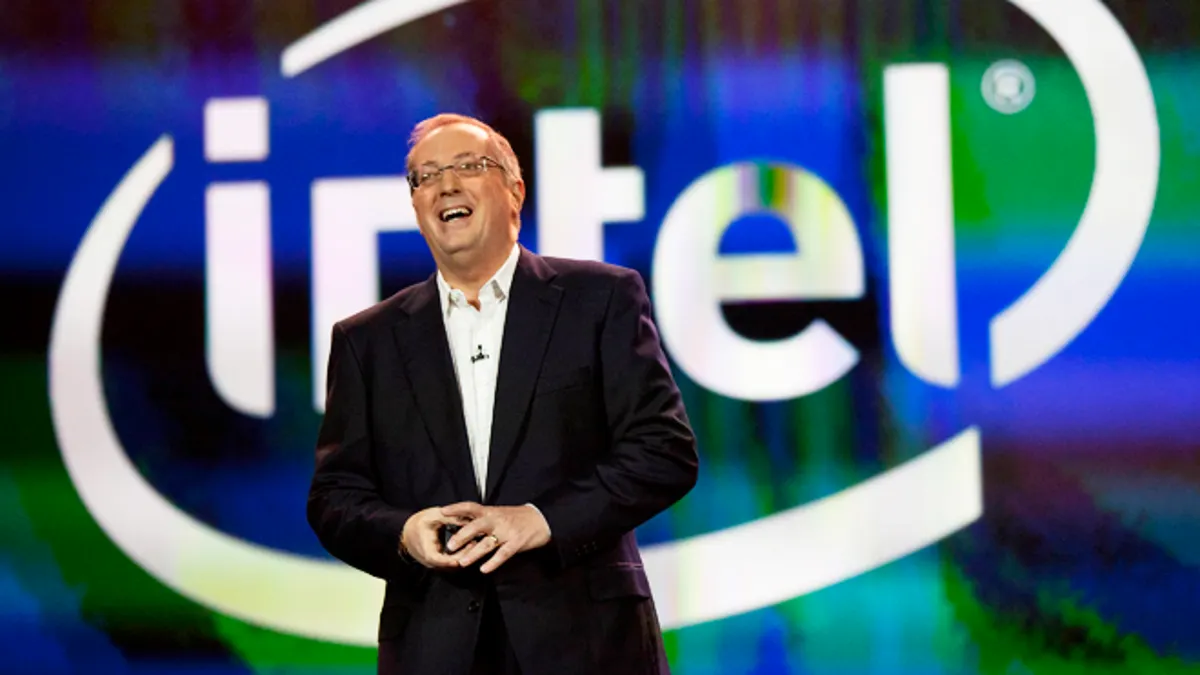
Before advising founders, I built keynote presentations for Paul Otellini, then CEO of Intel, for stages like CES — where every slide had to carry a message to thousands of people at once, hold attention, and survive being read on a screen from the back of a hall.
That is the same discipline an investor deck demands: a tight narrative arc, one idea per slide, and nothing on screen the audience has to work to decode. Most founder decks fail not on substance but on staging. I know what it takes to make the story land.
The fundraising landscape has inverted.
AI has rewritten the economics of building a company. The pitch has to reflect the new reality — not the SaaS playbook of the last decade.
Large rounds and lean bootstrappers.
We are seeing both ends at once: outsized seed and Series A rounds for ambitious AI-native plays, and a rising wave of companies that bootstrap further than ever before because the tooling lets a handful of people do the work of a department.
Small teams, large outcomes.
Revenue per employee has become the signal investors read for AI-native discipline. The AI-native labs reset the standard for how much a single employee should generate — and founders are now measured against it.
Efficiency is the story.
Capital no longer rewards headcount. It rewards leverage. Your deck has to show that your architecture and your team produce outcomes at a ratio the old playbook could not.
Vertical AI, not horizontal tools.
Horizontal tools are commoditizing, but they lack workflow integration and domain nuance. Vertical AI wins by owning the workflow—domain competence, regulation, and industry data that compound into a flywheel—and by pricing on outcomes rather than seats, capturing professional-services spend, not just software budgets.
Small teams now build large.
The signal investors read for that discipline is revenue per employee — and a generation of AI-native companies has reset the benchmark. The number that matters is ARR per employee.







Revenue-per-employee figures: Ben Lang, 2025. Company logos shown alongside representative profiles in the AI-native cohort.
Three pillars, from technology to a venture-scale story.
Every engagement moves through the same three pillars. The rest of this page is built around them — what each one is, and how we do it.
Narrative architecture
The deck's arc end to end: founding insight, problem, market, and ask shaped into one momentum-building story, staged to land.
Unique Value Proposition & moat framing
Honest differentiation and a defensible value-chain position an investor can underwrite — not a matrix that claims to beat everyone everywhere.
Round & outreach strategy
Round sizing tied to milestones, target-investor mapping, and disciplined outreach that respects time and earns the meeting.
Narrative architecture.
A deck is a spine for a conversation, not a document to be read. The arc has to answer "why this, why now, why you" before an investor has to ask — and it starts with founder-market fit.
Founder-market fit is the question behind the question.
Every investor is asking product-market fit. Fewer founders realize the question underneath it: founder-market fit. Why is this the right team — and why is it the right person — to build this, now?
That answer lives in your founding insight: what you understand about this market, workflow, or technology that almost no one else does, and that you earned the hard way. A founding insight is not a feature; it is the unfair conviction that explains why you saw the opening first. We make it explicit, defensible, and central to the narrative.
Ten slides, one high-attention arc.
The main investor deck should be tight: roughly ten slides in a logical, momentum-building order. Hook while you have full attention; offload everything secondary to an appendix behind the ask.
- 01Product summary & value proposition
Say what you do immediately, while you have their full attention. Be solution-specific — name the exact workflows you automate, not "AI for X."
- 02Team
Establish founder-market fit and relevant expertise up front. Lead with the executing team; use recognized operators and investor logos over generic advisory lists.
- 03Problem in the market
Frame a painful, specific bottleneck as a narrative, not a bullet list. Make sure the pain is big enough to warrant a venture-scale solution.
- 04Customer & market size
Build the market bottom-up (TAM/SAM/SOM), not "1% of a huge number." Show the obtainable slice you can actually attack first.
- 05Product overview & status
Real screenshots or wireframes over theoretical graphics, plus a near-term roadmap. Avoid over-promises like "100% accuracy" that cost credibility.
- 06Competitive landscape
Map your real differentiation. Acknowledge what you don't do — claiming to beat every competitor on every axis reads as suspicious, not strong.
- 07Financials
Clear business economics: average contract value, revenue, gross margins. Standard number formatting and explicit labels like /mo — no obscure acronyms.
- 08GTM strategy & status
Define the ideal customer profile and show proof of real customer engagement, not just plans.
- 09Next steps
Immediate product milestones and go-to-market activities — what happens next, concretely.
- 10The ask
State how much you're raising and exactly which operational milestones that capital unlocks.
The craft I coach most often.
A pitch fails on staging as often as on substance. Six tips that keep a deck legible, credible, and hard to argue with.
Streamline ruthlessly
Clean, concise, far less text than you think. Cut dense corporate jargon. The deck is a spine for the conversation, not a document to be read.
Make it legible on a screen share
Fonts large enough to read over video. Standard number formatting and explicit time labels — built for how decks are actually presented now.
Show data, don't describe it
Replace concentric-circle diagrams and text walls with clear charts and real product visuals. Let the picture carry the point.
Offload to the appendix
Granular roadmaps and secondary data live behind the ask. The main flow stays at altitude; the depth is there when diligence wants it.
Avoid messaging contradictions
Don't praise the alternative you just called the problem — calling yourself "Excel-like" right after framing Excel as the pain undercuts the whole story.
Stay credible on claims
No "hallucination-free" or "100% accurate" promises that technical investors will immediately test. Conviction is fine; unprovable absolutes are not.
Unique Value Proposition & moat framing.
Strong technology with a weak story is the most common way deep tech loses. The work here is making your differentiation legible — and credible — to capital.
Where you sit in the value chain.
Make the value-chain position explicit: what you must be best at, what flows through you, and why that position compounds rather than erodes.
The narrow slice you win first.
Acknowledge what you don't do. Claiming superiority over every legacy competitor on every axis reads as suspicious; winning a narrow slice first reads as real.
The moat that holds under load.
Data loops, proprietary context, switching costs, governance — framed as a moat an investor can underwrite, not a feature list.
Round & outreach strategy.
A great deck still has to reach the right investor in a way that earns a reply. I've run that outreach for my own startup and on behalf of the companies I advise — and the discipline of the company shows in the very first email.
Round strategy before the first email.
How much to raise, against which milestones, and which investors actually fit the thesis — mapped before a single message goes out. Outreach into a void wastes the founder's scarcest resource: time and credibility.
The clearest example of disciplined outreach is the cold email I sent to Nicolas Sauvage, President of TDK Ventures, introducing EdgeCortix. It opened TDK Ventures' first-ever investment in a Japanese company and earned a reply within the hour — and later became the subject of his article, "The Cold Email VCs Want."
What made it work was not length. It was discipline.
"A cold email is not a pitch. It is your first impression of discipline — present real traction, respect the investor's time, and let the facts speak for themselves."
This strategy produced "the cold email that stood out" — one that Nicolas Sauvage, President of TDK Ventures, viewed as "exceptional" and made the subject of a piece.
Read "The Cold Email VCs Want" →The four qualities behind a cold email that lands.
In his article, Sauvage named four essential qualities the introduction demonstrated. They are the discipline we build every raise around.
Clear relevance
Real proof, not promises
A credible bridge
A small and reasonable ask
Make it legible. Make it investable.
Bring your innovation, your traction, and your founding insight. We'll build the narrative, the moat framing, and the outreach that get it in front of the right capital.