Pitching a space, defense, or dual-use startup to accelerators and early-stage investors
How evaluators judge space, aerospace, defense, and dual-use startups, and what founders should prepare on proof, survivability, the buyer, procurement, non-dilutive funding, export, and ownership.
Space and defense startups pitch into a market where the buyer, the budget, and the rules all differ from commercial technology. Evaluators are often keen on these companies, because defense budgets have grown and early-stage investors want more deep tech. They are also quick to spot founders who do not yet understand how government customers buy, or how hard space is on hardware.
This guide is for founders building satellites and space components, aerospace systems, drones and counter-drone systems, navigation, defense software, and dual-use technologies with both commercial and military customers. It explains how evaluators judge these companies and how to prepare. It draws on patterns observed across early-stage selection interviews and builds on the general pitch preparation guide.
How space and defense pitches are judged
Specialists hold the deciding view. Most selection groups include only one or two people with defense procurement, national security, or space hardware experience. Generalists defer to them, and selection staff often route these companies to them directly. Expect sharp, specific questions on buyers, programs, and survivability.
Proof against the real environment decides technical credibility. Evaluators want to know how the system performed in the field, in orbit, or in a test that reproduces the conditions it will face. A concept or simulation is only the start of the story, and so is a lab result.
Venture fit is a separate question. A defense or space product can be valuable and still fit government grants or an acquisition exit better than venture capital. Evaluators routinely ask whether the business can grow large enough for a venture return, or whether non-dilutive funding suits it better.
Policy and budgets are part of the risk. Programs, priorities, and agencies change with administrations and budget cycles. Founders who depend on a single program are asked what happens if it disappears.
Proof that counts
- A working prototype before the customer. Defense buyers respond to systems that already fly, drive, or operate. Companies that build first and then approach the customer are received far better than those waiting for a contract to start building.
- Field results in the target conditions. Show performance in the environment that matters, whether contested or jammed signals, terrain without features, weather, sea state, or night operations. State plainly what has not yet been tested.
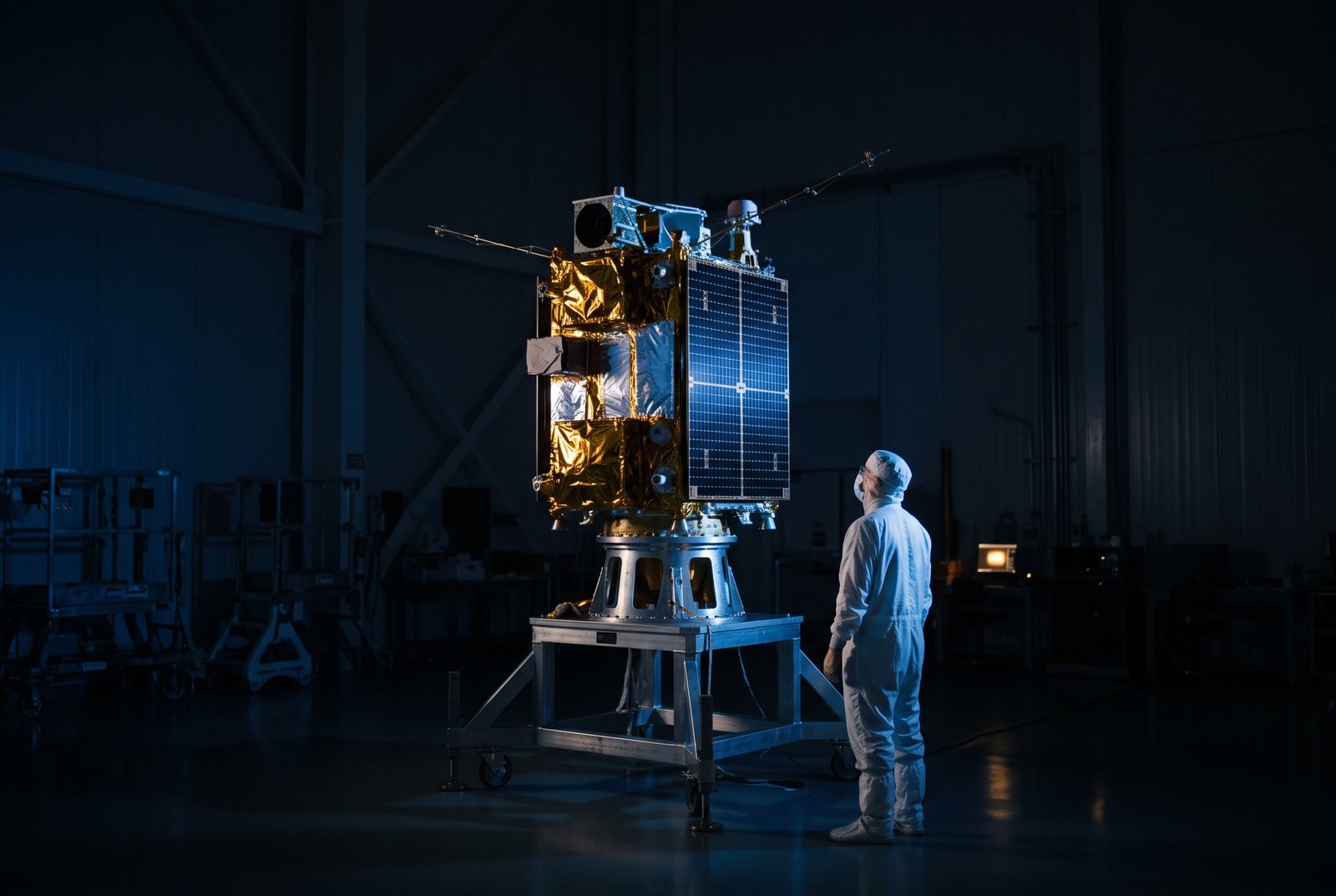
- Space survivability data. For space hardware, evaluators ask about thermal cycling, radiation dose, atomic oxygen, and other orbital effects, and they ask where the heat goes. Launch is rarely the hard part for light components; surviving years in orbit is. Show test results or a dated test plan.
- Flight heritage and its cost. Customers buying space hardware value flight heritage. Explain how you will get it, through a rideshare, a demonstration mission, or a partner's spacecraft, and what it will cost.
- Fair comparisons. Benchmark against what the customer can buy today, built and tested, under the same conditions. Comparing a future design with a current competitor product draws immediate skepticism.
- Accurate descriptions. A demonstration at an open test event, a grant proposal under review, or a positive evaluation score is useful, and each should be described exactly as what it is. Evaluators with defense experience can tell an award from a proposal.
What you build
Evaluators ask which parts of the system you build and which you buy, license, or outsource.
- Show the boundary clearly. Name the components you design and own, and the ones that come from suppliers.
- Own the critical capability. Licensing the core function, such as navigation, from another company invites the question of what remains yours.
- Expect the giants question. Large defense contractors, new defense technology companies, and major launch and space companies may be able to build the same thing. Name the structural reason they will not, or explain why they would rather buy or partner.
- Design for open architectures. Defense customers increasingly expect modular, open systems that avoid lock-in, and they scrutinize data rights in technology built on someone else's work.
The buyer
Defense customers
"The Department of Defense" is a budget, and evaluators will ask which part of it buys your product.
- Name the program office. Identify the command, program executive office, or program manager with the problem and the money to solve it.
- Show the path to production. Special operations and experimentation units fund early testing, though they often buy in small quantities. A credible plan moves from experimentation through a program of record to production, with the contracting vehicle named at each step.
- Name the vehicle. Research and development agreements, prototype agreements, innovation-unit contracts, and cooperative agreements with test ranges are concrete steps evaluators recognize.
- Choose the channel. Each sales route has trade-offs, whether you sell directly or go through prime contractors or manufacturers already supplying the military. Selling only through a component supplier or equipment maker can limit revenue.
- Show relationships. Defense procurement depends partly on knowing the right people. Problem sponsors, warm introductions, and prior work with a unit all count.
- Lead with the largest mission set. A pitch built around the founder's origin story can miss the larger application. Lead with the mission that has the most buyers and budget.
Space customers
- Name the commercial customers. Satellite operators, constellation builders, and space infrastructure companies make up a growing commercial market. Name the companies you are in discussion with, and show any letters of intent or agreements.
- Do the revenue math. A component worth a few thousand dollars per satellite can still add up to a small business. Show how revenue grows, whether from more units, a larger share of each spacecraft, or a move from components to systems.
- Consider a terrestrial market first. Some space technologies have a less demanding application on the ground that can produce revenue sooner. Evaluators may ask whether one exists.
- Respect the customer's schedule. Space customers plan around launch dates and rarely accept long slips. Show a delivery schedule you can meet.
Allies and dual use
- International defense buyers can be faster and more motivated than domestic ones, particularly where a threat is immediate. Name the countries and programs.
- Dual-use products widen the market, and evaluators will check whether the commercial and military stories reinforce each other or split the company's focus. When one market is clearly stronger, they may advise you to drop the other.
- Allied defense accelerators and innovation programs are a recognized route to buyers and test opportunities. Mention any you have applied to or joined.
Funding: venture and non-dilutive
- Use non-dilutive funding deliberately. Government research grants, defense innovation programs, and space-agency funding can carry early development. Evaluators expect founders in this sector to have pursued them, and they ask why if you have not.
- Report grant revenue accurately. Grant revenue helps, but it is not commercial validation. Distinguish proposals from awards, and awards from production contracts.
- Make the venture case explicitly. Show the path to a business large enough for a venture return, such as a platform across many programs, a move into production volumes, or a commercial market alongside defense. A profitable niche with a small serviceable market is often judged better suited to grants or an acquisition.
- Know the exit landscape. Prime contractors and large space companies acquire startups regularly. Naming plausible acquirers, and what they would pay for, strengthens the case.
Rules, ownership, and permission
- Export controls. Know whether your technology falls under export controls, and how that affects which customers you can sell to and which people you can hire.
- Foreign ownership. Companies founded or owned outside the target country often need a domestic entity, a domestic partner, or a mitigation plan to sell to defense customers. Address it before you are asked.
- Immigration and clearances. Founder visas, security clearances, and access to controlled information can all slow a defense company. Show the plan.
- University spinouts. Faculty equity, institute ownership stakes, and patents held by professors or research centers draw sustained questions. Have the license and the cap table settled.
- Permission to operate. Using someone else's infrastructure, airspace, or spectrum needs their consent and often a regulator's. Products that attach to civilian infrastructure face legal and safety questions immediately.
- Misuse risk. For dual-use technology, evaluators may ask how an adversary could use the same capability. Have a considered answer.
The team
- Domain experience on the team. Founders who have served, worked in defense acquisition, or built space hardware answer the procurement and survivability questions directly. If the founding team lacks that background, name the advisors or hires who have it.
- A commercial or business-development lead. Scientist-led teams with no one to run sales and contracts draw the same question in every meeting.
- A complete, full-time team. Absent technical co-founders, founders still employed at a defense contractor, and solo founders building expensive hardware all count against the company.
Questions to rehearse
Technical
- What do you build in-house, and what do you buy or license?
- How has the system performed in the field, in the target conditions?
- What radiation, thermal, and orbital testing has the space hardware passed?
- What are the physical trade-offs, such as range against payload or power at night?
- Is your comparison against a product the customer can buy today?
- Why won't a large defense or space company build the same capability?
Business
- Which program office or customer buys the product, and with which contracting vehicle?
- What is the path from experimentation to production?
- Have you pursued government grants or innovation programs, and with what result?
- Is this a venture-scale business, or better suited to grants or an acquisition?
- What happens if your target program or agency loses funding?
- What are your export, ownership, and permission constraints?
- Who on the team has defense or space experience, and who runs business development?
Red flags to avoid
- Approaching defense customers with a concept and no working prototype
- "The Department of Defense" named as the customer, with no program office
- Relying on experimentation units with no path to a program of record
- Licensing the core capability from another company
- Space hardware with no radiation or thermal test plan
- Comparing a future design with a competitor's current product
- Describing proposals, open test days, or review scores as contracts
- A small serviceable market pitched as a venture business
- Foreign ownership, export, or visa issues not yet addressed
- Unsettled university or faculty equity
- Permission to use infrastructure or airspace not yet considered
- A business that depends on a single government program
- A solo or part-time team building expensive hardware
Checklist
- Working prototype, with field or environmental test results
- Untested conditions stated plainly
- Space survivability results or a dated test plan
- Flight heritage path and cost
- Comparison against what the customer can buy today
- Build, buy, and license boundary shown, with the core capability owned
- Named program office or commercial customers
- Contracting vehicle and path to production
- Sales channel chosen among direct, prime, and supplier
- Non-dilutive funding pursued and reported accurately
- Venture case or acquisition path made explicit
- Export, foreign ownership, and visa position addressed
- IP and university equity settled
- Permission to operate and misuse risk considered
- Defense or space experience and a business lead on the team